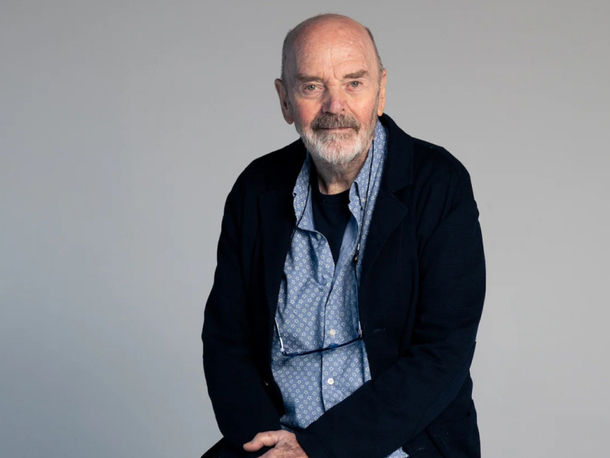
Adrianno Goldschmied didn't just design jeans—he orchestrated a revolution. When he passed away at 82, the fashion world mourned not merely a designer but a visionary who could transmute ordinary blue cotton into cultural currency. They called him the "godfather of denim," but that title barely scratches the surface of his influence. For over half a century, this Italian maverick collaborated with titans like Diesel, Replay, Gap, AG, and Goldsign, fundamentally rewiring our collective understanding of what jeans could become.
Born in 1944 in Trieste to Ashkenazi Jewish intellectuals, Goldschmied's childhood unfolded against a backdrop of post-war reconstruction and intellectual ferment. His father, Livio, moved in circles that included the legendary typewriter manufacturer Adriano Olivetti—a connection that would later inspire the son's name. As a boy, Goldschmied's fascination with denim began watching American soldiers, whose jeans represented "clothing of heroes" in a country still finding its footing. But here's the thing: he entered fashion without a single day of formal training. In the early 1970s, he began selling imported clothing outside nightclubs before opening a boutique in Cortina d'Ampezzo. This direct contact with customers proved revelatory—he saw denim's untapped potential beyond mere utility. "Denim isn't just fabric," he would later say, "it's a laboratory for experimentation." For Goldschmied, the magic lay not in surface design but in how material transformed through wear, in its behavior against the body.
In 1974, he launched Daily Blue, introducing new silhouettes and premium pricing that challenged industry norms. The 1980s saw him at the epicenter of Europe's denim revolution through his creative platform, Genious Group. This incubator gave birth to and nurtured brands like Diesel and Replay—Goldschmied is considered Diesel's co-founder. He pioneered advanced fabric treatments that today's industry takes for granted: acid washes, enzyme processes, and multi-stage aging techniques that elevated material manipulation to an art form. And here's where it gets interesting: Goldschmied was among the first to systematically work with stretch fibers, obsessing over achieving the perfect fit. "Perfect jeans are 80% engineering, 20% aesthetics," he insisted. His philosophy treated denim as a technical challenge as much as a creative one.
In America, he scaled these ideas further. In the early 2000s, he co-founded AG Adriano Goldschmied, emphasizing technical innovation and clean aesthetics. Simultaneously, Goldsign emerged as his luxury laboratory—limited editions, experimental fabrics, and couture-level craftsmanship. While AG focused on technological perfection, Goldsign embraced "couture denim" with smaller runs and bolder design statements. Beyond his own brands, Goldschmied collaborated on over 50 denim projects, including Gap's 1969 line. Remarkably, he championed sustainability long before it became fashionable, developing House of Gold to pioneer eco-friendly textile solutions and water-conserving production methods.
Even while battling serious illness, Goldschmied remained active until the end—attending industry events, consulting manufacturers, and sharing his vision. "Our goal is to make people happy," he said. "When I create something, I love imagining my customer smiling at themselves in the mirror." What made Goldschmied revolutionary wasn't just his designs but his understanding that denim could be simultaneously democratic and luxurious, technical and emotional. He transformed workwear into a canvas for innovation, proving that the simplest garment could carry the most complex ideas.