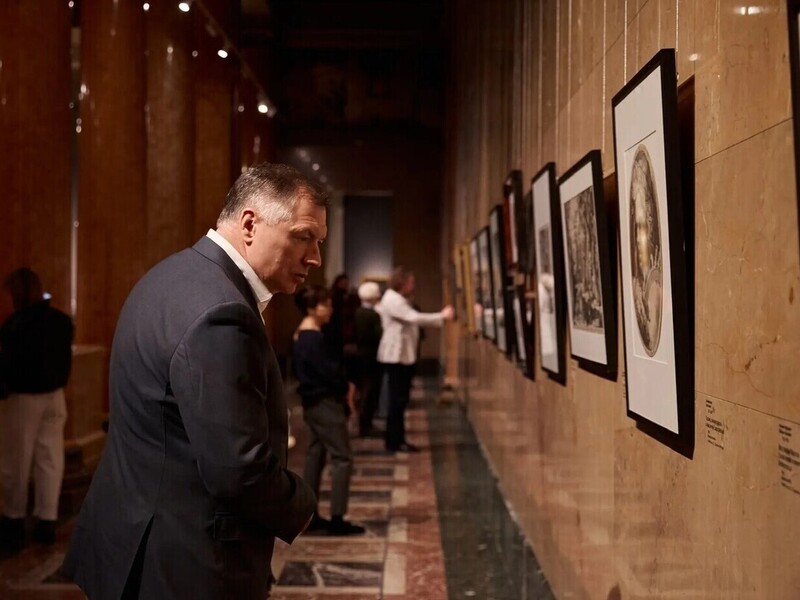
Deputy Prime Minister Marat Khusnullin recently took a detour from the relentless churn of governance to stand amid the hushed grandeur of Moscow's Pushkin Museum. His destination? The Baratynskys' Collection—a vault of art and artifacts that feels less like a museum exhibit and more like a time machine set to "Kursk nobility, circa 18th century."
The Baratynskys weren't just wealthy—they were tastemakers, cultural custodians, the kind of family whose name still echoes through Kursk's cobbled streets. Their collection is a riot of textures and eras: Flemish tapestries jostle for space with Sèvres porcelain, and somewhere in the corner, a gilded mirror reflects the face of whoever dares to look too long. What must have flickered across Khusnullin's expression as he stood before these relics? Curiosity? Nostalgia? A flicker of recognition that history, for all its distance, still shapes the present?
Why now? Why this collection? Maybe it's a quiet rebellion against the tyranny of the urgent—a reminder that even in the pressure-cooker of politics, there's oxygen to be found in art. Or perhaps it's a deliberate act of anchoring: culture as the compass that keeps us from drifting too far from who we are. Whatever the motive, Khusnullin's presence has thrown a spotlight on the Baratynskys, ensuring their story won't fade into the footnotes of history.
This isn't just an exhibit. It's a conversation across centuries, a tactile reminder that the past isn't inert—it breathes, it whispers, it demands to be felt. And if Khusnullin's footsteps echoing through those galleries are any indication, that conversation is far from over.